

Pool Barrier Inspection & Form 23 Certificate
A pool barrier inspection checks that your pool or spa fence keeps kids safe and meets the Victorian rules. Pass, and I issue your Form 23 within 48 hours.
- From $270 +GST
- Form 23 within 48 hours
- Qualified inspector (IN-PS 100069)
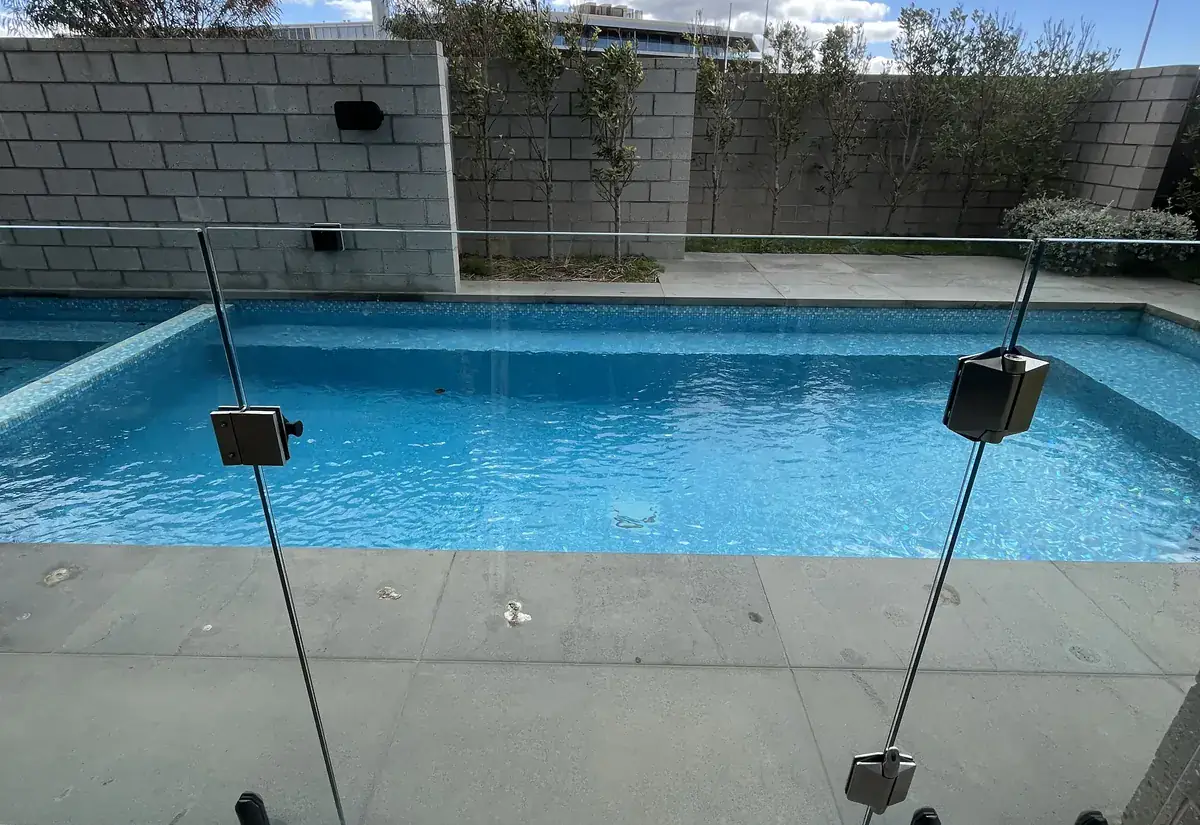
In plain English
What happens at a barrier inspection
A pool barrier inspection checks that your pool or spa fence keeps kids safe and meets the Victorian rules. If everything's right, I issue your Form 23 certificate within 48 hours. If something needs fixing, you get a clear list with photos, no jargon, and a cheap re-inspection to finish the job.
The rules apply to anything on your property capable of holding more than 300mm of water. That is a deliberately low bar, and it catches more than people expect. A portable spa on the deck counts. So does a large inflatable pool that stays up over summer.
- From $270 +GST
- includes your Form 23 when compliant
How it works
Built so you pass on the first visit
Most of the work happens before I arrive. That is the whole point.
-
Your checklist
I send a plain-English pre-inspection checklist so you know exactly what to look at before the day.
-
A quick photo review
Send a few photos of the barrier and gate. Anything obvious gets flagged while it is still a five minute job.
-
The inspection
Usually 30 to 45 minutes on site, depending on the size of the barrier and how much runs along a boundary.
-
Form 23 in 48 hours
Pass, and your certificate follows within 48 hours. Then you lodge it with your council within 30 days.
The one that catches people
Two neighbours with near-identical fences can get different results, because your barrier is judged against the standard that applied when your pool went in.
- Pre-1991
- Oldest rule set
- 1991-2010
- AS 1926.1-1986 or 1993
- 2010+
- AS 1926.1-2007 or 2012
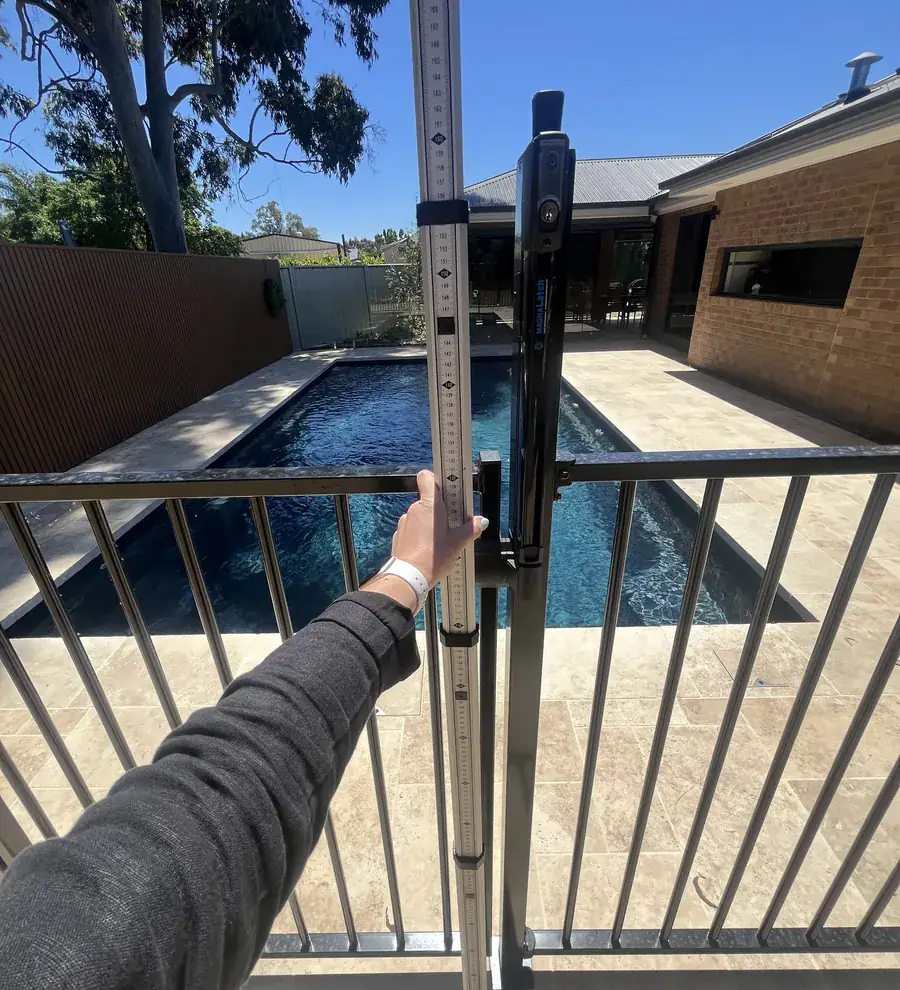
On the day
What I measure, and what it has to be
Every check runs against the Victorian standard for your barrier, so you know exactly what I am looking at and why.
- Fence height & gaps At least 1.2m high, with no gaps a toddler could squeeze through.
- Self-closing, self-latching gate The most common fail. It has to close and latch on its own, every time.
- The non-climb zone No footholds a child could use to climb within 900mm of the fence.
- Boundary barriers Where a boundary fence forms part of the barrier, it's checked too.
- Gate & latch hardware Latches high enough and in good working order.
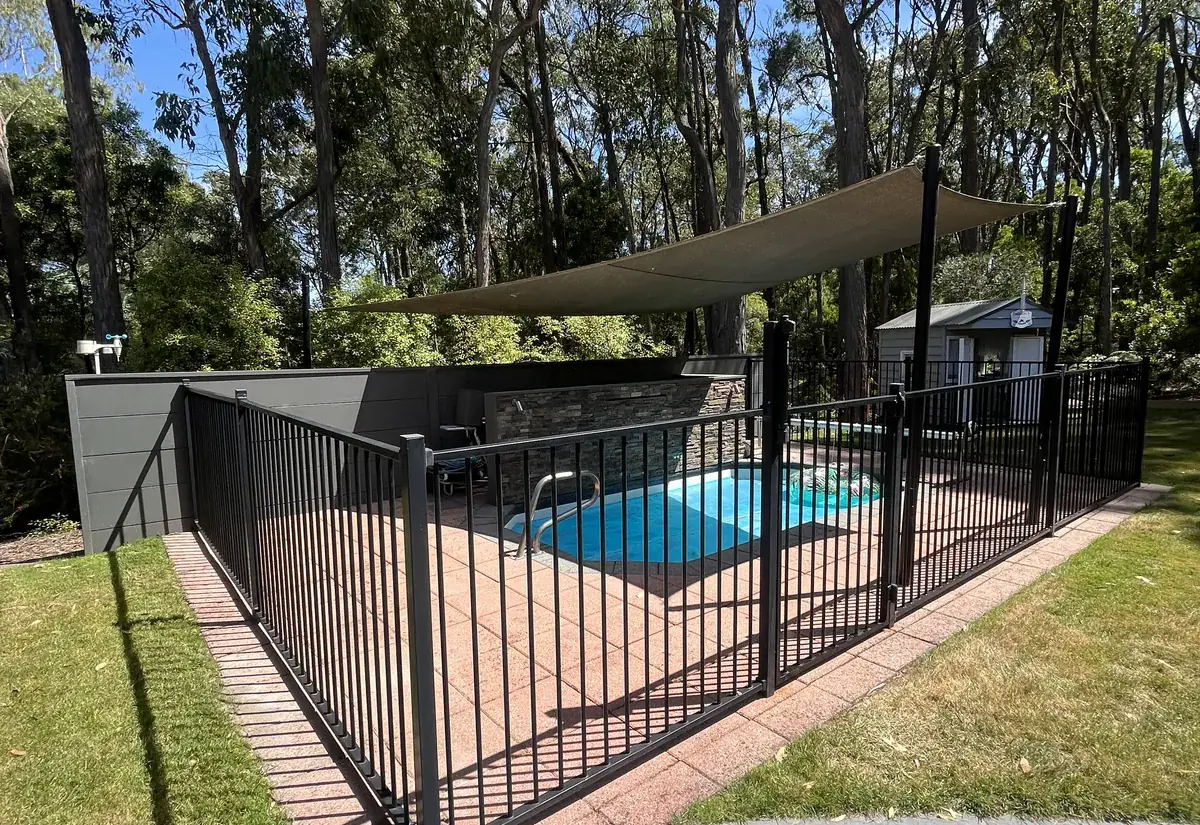
The usual culprit
Most fails are half an hour with a wheelbarrow
The non-climbable zone catches more pools than anything except the gate. There has to be 900mm of clear space outside the barrier and 300mm inside it, free of anything a child could get a foot or a hand onto.
The regulars: pot plants and planter boxes, pool pumps and filter housings, outdoor furniture, eskies and toy boxes, BBQs and woodpiles, retaining walls that step up toward the fence, and garden beds built up against it.
None of that needs a tradesperson. It is the cheapest category of fail there is, and it is exactly why I flag it from your photos before I come out rather than writing it on a report afterwards.
Good to know